Canterbury Bells Crown Single Mixed
Canterbury Bells 'Crown Single Mixed' Seeds
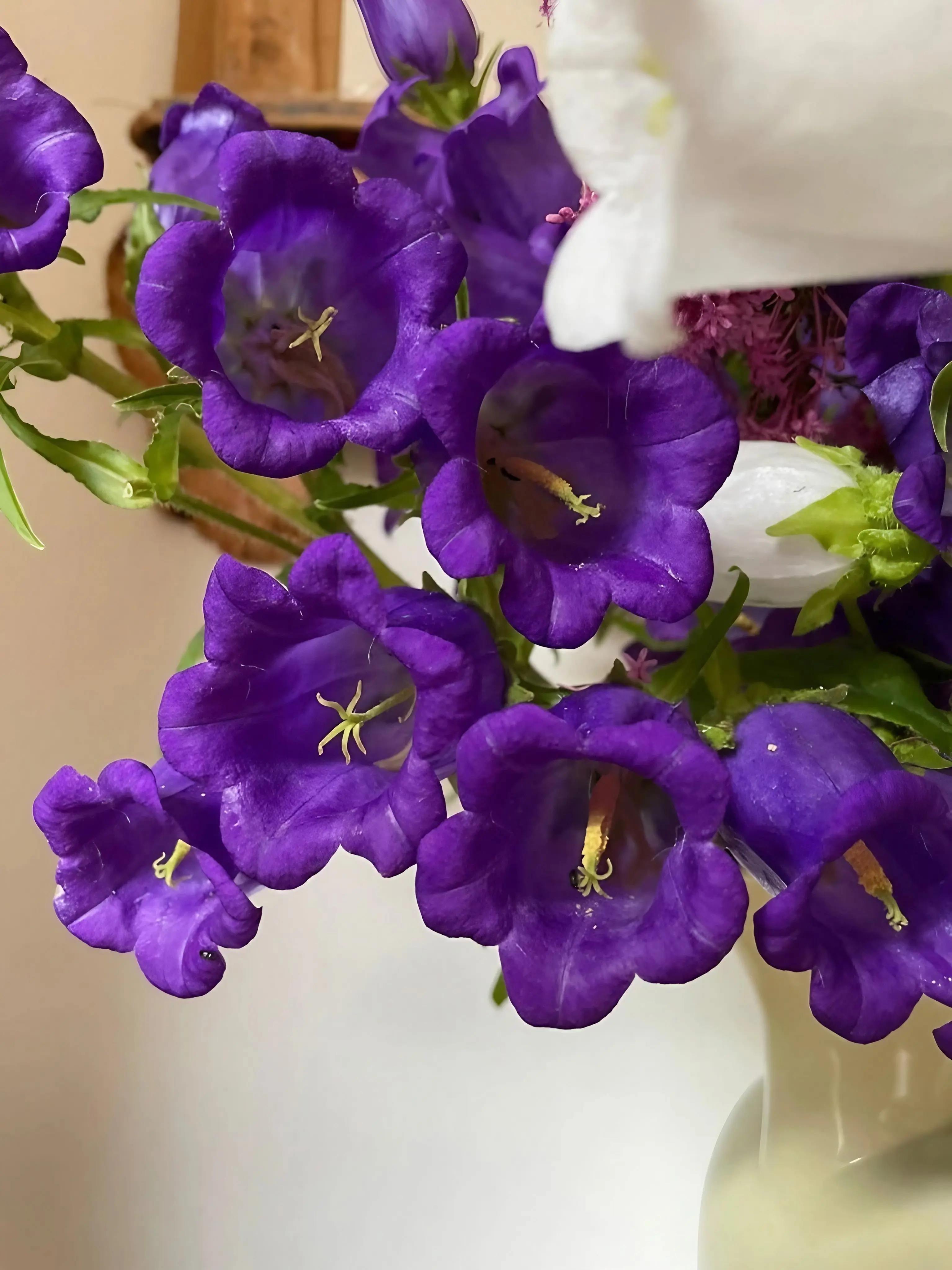
Towering spikes of enormous, inflated bells in lavender, rose, and white. A quintessential cottage garden biennial that provides a vertical wall of colour and a shelter for sleepy bumblebees.
If you dream of a traditional English cottage garden, Canterbury Bells are non-negotiable. This classic variety produces tall, sturdy spikes loaded with enormous, inflated bell-shaped flowers in soft shades of lavender-blue, rose-pink, and pure white.
These are flowers with serious impact. Growing up to 90cm tall, they create a towering wall of colour in early summer (June-July), filling the gap between the spring bulbs fading and the summer annuals hitting their stride. They are excellent cut flowers, lasting over a week in a vase, and are a favourite of bumblebees who love to disappear inside the huge bells.
Read More
🌿 Understanding the Plant
Campanula medium is a robust Hardy Biennial (H5). This means the plant operates on a two-year biological cycle: in its first year, it develops a strong rosette of leaves and a deep root system. After overwintering in the garden (withstanding temperatures down to -15°C), it triggers its spectacular flowering phase the following spring.
The "June Gap" Specialist: Canterbury Bells are renowned for blooming during the "June Gap"—the period in the British gardening calendar when spring tulips have finished, but summer-sown annuals haven't yet reached their peak. This makes them an essential strategic asset for maintaining continuous garden colour.
Bumblebee Shelter: The enormous, pendulous bells are not just nectar-rich; they serve as a structural habitat. Bumblebees are frequently found sleeping inside the inflated blooms overnight, using the flower as a natural, sheltered "bee-hotel" during the early summer months.
🌱 Growing Guide
To ensure a magnificent display in the second year, Canterbury Bells should be started in early summer to build a resilient framework before winter dormancy.
How to Sow:
Sow indoors or in a cold frame from April to June. Surface sow the seeds onto moist, high-quality seed compost and do not cover them; Canterbury Bell seeds are light-sensitive and require exposure to trigger germination. Alternatively, direct sow into a "nursery bed" in May or June. Germination typically occurs within 14-21 days.
Where to Plant:
They prefer full sun or partial shade and thrive in fertile, well-drained soil. In autumn (September/October), transplant your leafy rosettes from the nursery bed to their final flowering positions. Space plants 30cm apart to allow for the substantial floral spikes that will emerge the following spring.
Ongoing Care:
The flowering spikes can become very heavy when loaded with blooms. In windy or exposed gardens, we recommend providing a sturdy bamboo cane or support ring as soon as the central spike begins to rise in spring. For the vase, harvest stems when the bottom bells have fully opened but the top buds remain closed; this ensures a long-lasting display of up to 10 days.
📋 Plant Specifications
| Botanical Name | Campanula medium |
| Common Name | Canterbury Bells |
| Plant Type | Hardy Biennial |
| Hardiness | H5 (Very Hardy) |
| Light Requirements | Full Sun / Part Shade ⛅ |
| Height | 75cm - 90cm (Tall & Statuesque) |
| Spread | 35cm |
| Spacing | Plant 30cm apart |
| Flowering Period | May to July (Year 2) |
| Perfect For | ✂️ High-Impact Cut Flower Spikes 🏡 Traditional Cottage Garden Backdrops 🐝 Prime Bumblebee Nectar & Shelter 🍂 Professional Biennial Layering |
| Seeds per Packet | Approximately 300 tiny seeds |
🤝 Beautiful Garden Combinations
Bloom-synchronised with other heritage available partners from our range, Canterbury Bells are the anchor of the early summer border:
- 🦊 Foxgloves 'Excelsior Mix': The Statuesque Duo. Both are tall, statuesque biennials flowering simultaneously (May-July). The elegant pastel spires of the Foxgloves tower behind the inflated bells of the Canterbury Bells, creating a professional-grade vertical backdrop for a traditional English cottage garden.
- 🌸 Sweet William 'Auricula Eyed': The Layered Classic. Create perfect graduated tiers of colour by planting the jewel-toned Sweet William (30-40cm) in front of the taller Canterbury Bells. Both are fragrant, pollinator magnets that fill the garden with colour during the essential "June Gap."
📅 Sowing & Flowering Calendar
Sow in early summer (Year 1) to ensure a spectacular harvest of towering bell-laden spikes the following May to July (Year 2).
🐝 Pollinator Favourite
Canterbury Bells are a superstar for British bumblebees. The huge tubular flowers provide an easy landing pad and nutrient-rich forage, and you will often find bees using the blooms as a natural shelter during summer rain showers.
🏆 Robust Garden Stamina
Known for its stamina and ability to thrive in poor-to-average soils, Campanula medium is an essential choice for those wanting to create a romantic, low-maintenance biennial display that provides statuesque vertical colour year after year.
📖 Want more detailed growing advice?
View our Complete Growing Guide for Biennials →
Original: $2.95
-70%$2.95
$0.89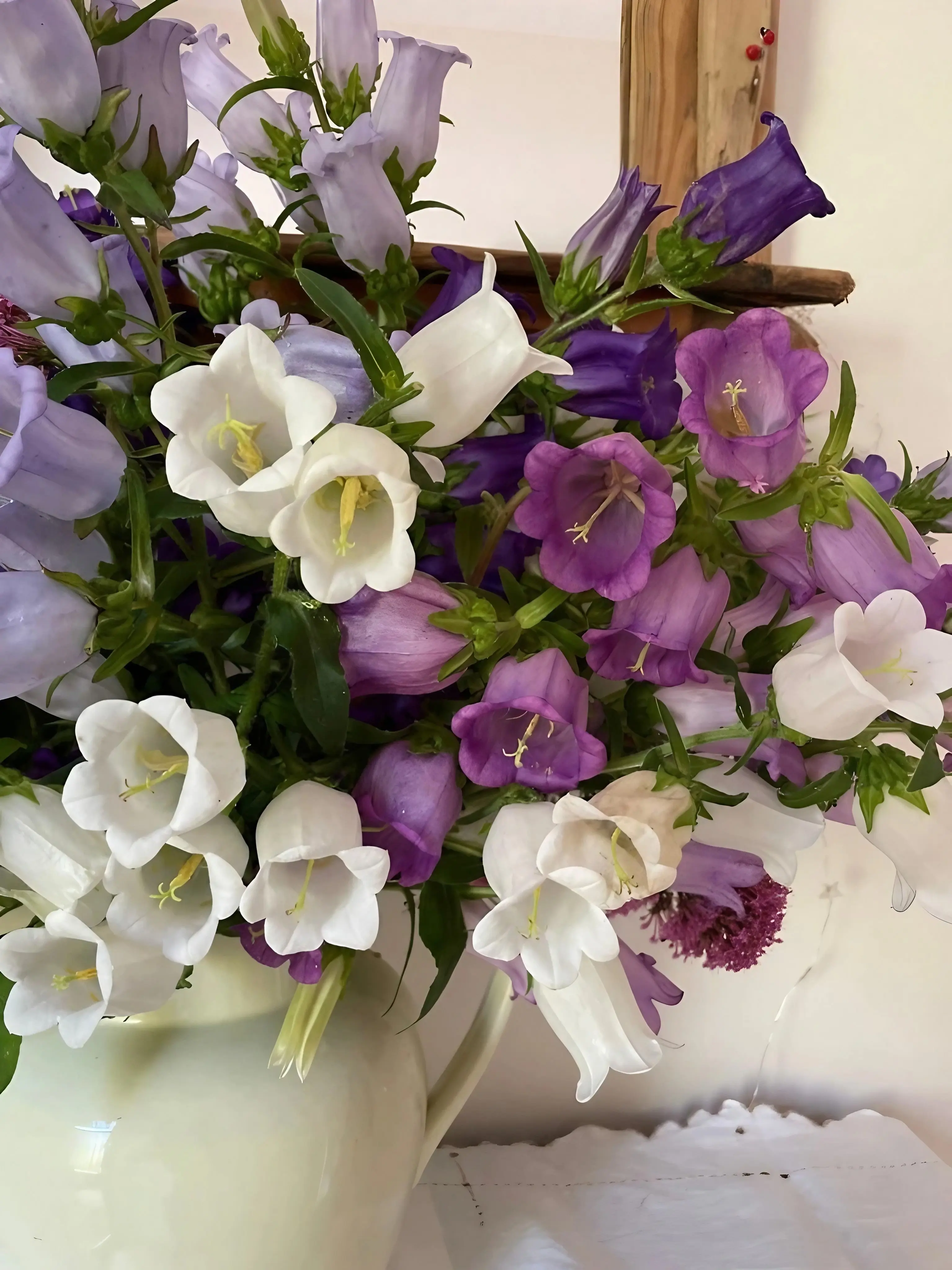


Description
Canterbury Bells 'Crown Single Mixed' Seeds
Towering spikes of enormous, inflated bells in lavender, rose, and white. A quintessential cottage garden biennial that provides a vertical wall of colour and a shelter for sleepy bumblebees.
If you dream of a traditional English cottage garden, Canterbury Bells are non-negotiable. This classic variety produces tall, sturdy spikes loaded with enormous, inflated bell-shaped flowers in soft shades of lavender-blue, rose-pink, and pure white.
These are flowers with serious impact. Growing up to 90cm tall, they create a towering wall of colour in early summer (June-July), filling the gap between the spring bulbs fading and the summer annuals hitting their stride. They are excellent cut flowers, lasting over a week in a vase, and are a favourite of bumblebees who love to disappear inside the huge bells.
Read More
🌿 Understanding the Plant
Campanula medium is a robust Hardy Biennial (H5). This means the plant operates on a two-year biological cycle: in its first year, it develops a strong rosette of leaves and a deep root system. After overwintering in the garden (withstanding temperatures down to -15°C), it triggers its spectacular flowering phase the following spring.
The "June Gap" Specialist: Canterbury Bells are renowned for blooming during the "June Gap"—the period in the British gardening calendar when spring tulips have finished, but summer-sown annuals haven't yet reached their peak. This makes them an essential strategic asset for maintaining continuous garden colour.
Bumblebee Shelter: The enormous, pendulous bells are not just nectar-rich; they serve as a structural habitat. Bumblebees are frequently found sleeping inside the inflated blooms overnight, using the flower as a natural, sheltered "bee-hotel" during the early summer months.
🌱 Growing Guide
To ensure a magnificent display in the second year, Canterbury Bells should be started in early summer to build a resilient framework before winter dormancy.
How to Sow:
Sow indoors or in a cold frame from April to June. Surface sow the seeds onto moist, high-quality seed compost and do not cover them; Canterbury Bell seeds are light-sensitive and require exposure to trigger germination. Alternatively, direct sow into a "nursery bed" in May or June. Germination typically occurs within 14-21 days.
Where to Plant:
They prefer full sun or partial shade and thrive in fertile, well-drained soil. In autumn (September/October), transplant your leafy rosettes from the nursery bed to their final flowering positions. Space plants 30cm apart to allow for the substantial floral spikes that will emerge the following spring.
Ongoing Care:
The flowering spikes can become very heavy when loaded with blooms. In windy or exposed gardens, we recommend providing a sturdy bamboo cane or support ring as soon as the central spike begins to rise in spring. For the vase, harvest stems when the bottom bells have fully opened but the top buds remain closed; this ensures a long-lasting display of up to 10 days.
📋 Plant Specifications
| Botanical Name | Campanula medium |
| Common Name | Canterbury Bells |
| Plant Type | Hardy Biennial |
| Hardiness | H5 (Very Hardy) |
| Light Requirements | Full Sun / Part Shade ⛅ |
| Height | 75cm - 90cm (Tall & Statuesque) |
| Spread | 35cm |
| Spacing | Plant 30cm apart |
| Flowering Period | May to July (Year 2) |
| Perfect For | ✂️ High-Impact Cut Flower Spikes 🏡 Traditional Cottage Garden Backdrops 🐝 Prime Bumblebee Nectar & Shelter 🍂 Professional Biennial Layering |
| Seeds per Packet | Approximately 300 tiny seeds |
🤝 Beautiful Garden Combinations
Bloom-synchronised with other heritage available partners from our range, Canterbury Bells are the anchor of the early summer border:
- 🦊 Foxgloves 'Excelsior Mix': The Statuesque Duo. Both are tall, statuesque biennials flowering simultaneously (May-July). The elegant pastel spires of the Foxgloves tower behind the inflated bells of the Canterbury Bells, creating a professional-grade vertical backdrop for a traditional English cottage garden.
- 🌸 Sweet William 'Auricula Eyed': The Layered Classic. Create perfect graduated tiers of colour by planting the jewel-toned Sweet William (30-40cm) in front of the taller Canterbury Bells. Both are fragrant, pollinator magnets that fill the garden with colour during the essential "June Gap."
📅 Sowing & Flowering Calendar
Sow in early summer (Year 1) to ensure a spectacular harvest of towering bell-laden spikes the following May to July (Year 2).
🐝 Pollinator Favourite
Canterbury Bells are a superstar for British bumblebees. The huge tubular flowers provide an easy landing pad and nutrient-rich forage, and you will often find bees using the blooms as a natural shelter during summer rain showers.
🏆 Robust Garden Stamina
Known for its stamina and ability to thrive in poor-to-average soils, Campanula medium is an essential choice for those wanting to create a romantic, low-maintenance biennial display that provides statuesque vertical colour year after year.
📖 Want more detailed growing advice?
View our Complete Growing Guide for Biennials →